
Custom plastic components · Shenzhen, China
Custom Plastic Standoffs for PCB and OEM Assemblies
Plasticpartsmfg manufactures drawing-based plastic standoffs for PCB assemblies, electronic instruments, sensor equipment and industrial controls. Specify male/female threads, through-holes, snap-fit or press-fit features, and custom lengths for your assembly.
These are made-to-project components—not off-the-shelf parts selected from a standard catalog. We support prototypes, low-volume orders, bridge production and repeat manufacturing based on your dimensions and requirements.
- Drawing-based manufacturing
- Prototype through repeat production
- Process reviewed for each project
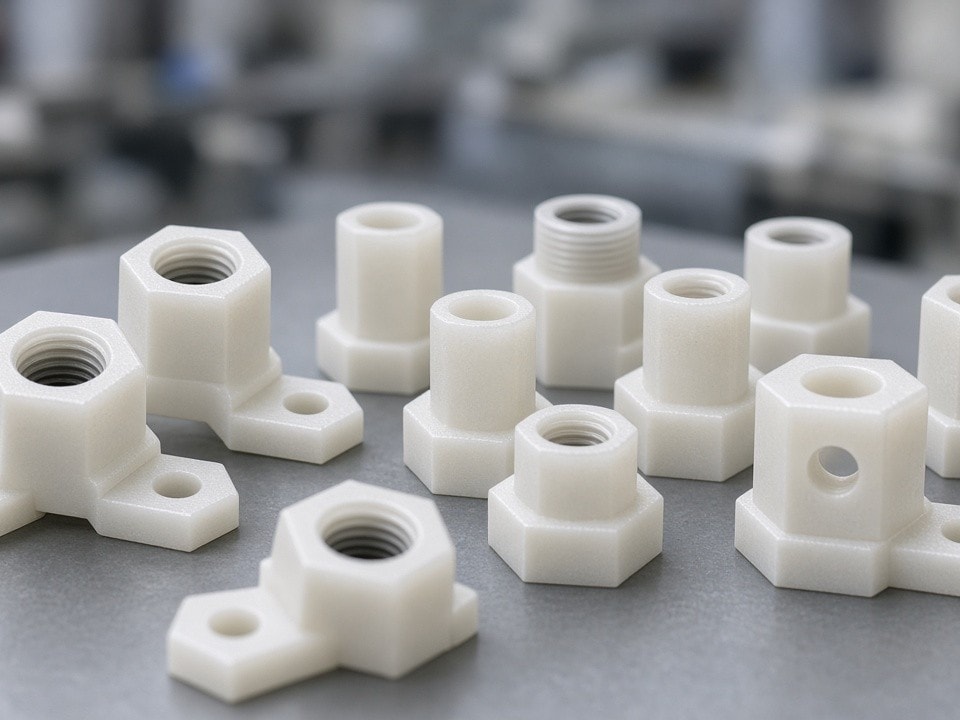
Configuration options
Common plastic standoff subcategories
Names often describe the thread arrangement, body shape or installation method. A single drawing can combine these features—for example, a hexagonal male-female PCB standoff with a custom length.
Plastic Threaded Standoffs
Male or female threads, with thread form and engagement defined by the drawing.
Plastic Male-Female Standoffs
A male thread at one end and a female thread at the other.
Plastic Female-Female Standoffs
Female threads at both ends for screw-fastened assemblies.
Plastic PCB Standoffs
Spacers for maintaining board-to-board or board-to-panel clearance.
Plastic Snap-Fit Standoffs
Retention features designed to engage a compatible panel, board or housing.
Plastic Press-Fit Standoffs
Interference-fit features for installation in a specified mating hole.
Plastic Hex Standoffs
Hexagonal bodies suited to wrench access or a defined anti-rotation profile.
Plastic Round Standoffs
Cylindrical bodies for compact or appearance-sensitive assemblies.
Plastic Insulating Standoffs
Plastic spacers selected to meet the assembly’s electrical isolation requirements.
Custom Length Standoffs
Nonstandard body lengths, shoulders or stepped sections for a specific stack-up.
Threaded, through-hole, snap-fit and press-fit features can be specified for the assembly. Suitability depends on the part geometry, material and mating components, so include board or panel thickness and installation method in your RFQ.
Material selection
Choose materials for insulation, strength and conditions
Material choice affects electrical properties, thread behavior, stiffness, temperature resistance and manufacturability. The right option depends on the environment and the loads applied during installation and service.
Specify performance requirements
For critical insulation, identify the material grade and electrical requirements. For flame-retardant applications, specify the required grade or standard and documentation. Availability and suitability must be confirmed; do not assume an unspecified resin meets a particular flame rating.
Common engineering plastics
- PA (nylon): Common for mechanical components; confirm grade and conditioning needs.
- POM: Often considered for dimensionally controlled parts and moving or mating features.
- PP and PE: Considered where their chemical and mechanical properties suit the design.
- PC and PBT: Used for selected electronic and industrial components, subject to project needs.
Higher-performance options
- PPS, PEEK, PSU and PPSU: Engineering-grade choices for more demanding conditions; specify operating temperatures and exposure requirements.
- ABS, PVC and other listed plastics: Evaluated according to functional and environmental needs.
Reliable threads and repeatable assembly
Thread reliability and assembly repeatability depend on the thread design, plastic grade, engagement, installation method and mating hardware. Share the fastener and expected installation conditions where possible. If a metal insert or other hardware is required, identify it so feasibility and assembly requirements can be reviewed.
Manufacturing route
Select a process around the part and order
Geometry, material, quantity and production repeatability inform process selection. Use the options below to compare common project stages.
When quantity, geometry or material makes the choice uncertain, a quote review can compare process options. Include both initial and forecast quantities if demand may increase.
Prototypes and low volumes
CNC machining
Suitable when dimensions, custom lengths or geometry changes need to be made without injection-mold tooling. Turned or milled forms—including round or hex bodies and specified thread features—can be reviewed against the part drawing for practical machinability.
Consider for: One-off samples, design iterations and small quantities with custom dimensions. Confirm that the requested geometry and features are practical to machine.
Repeat production
Injection molding
May be appropriate when repeat production and expected order volume justify tooling. The part can be reviewed for moldability, parting-line location, draft and feature formation. Tooling requirements, production quantities and potential design adjustments are discussed before proceeding.
Consider for: Repeat orders or higher production quantities, with tooling cost, cycle production and moldable design evaluated together.
Early fit and assembly checks
3D printing and supporting processes
Plastic 3D printing can support early fit and assembly checks, depending on material and functional requirements. It may not reproduce the behavior or properties of production-grade molded or machined plastic, so identify whether the prototype is for visual review, dimensional fit or functional testing.
Plasticpartsmfg can also discuss other custom plastic manufacturing processes where appropriate. Selection is based on project geometry and requirements—not a one-process-fits-all approach.
Drawing and fit details
Dimensions, threads and assembly requirements
Standoff performance depends on details that may not be clear from overall length alone. Include applicable information in your drawing or RFQ.
- Overall length, body length, shoulders and step dimensions
- Body shape, across-flats dimension or outside diameter
- Thread location, type, nominal size, pitch and usable engagement depth
- Through-hole diameter or other specified bore features
- Snap-fit or press-fit geometry and mating hole dimensions
- Board, panel or housing thickness and assembly stack-up
- Tolerances for fit-critical dimensions
- Material grade, color and surface or finishing requirements
Typical applications
Consistent parts for electronics and industrial equipment
Custom plastic standoffs maintain spacing, support boards and help isolate components across a range of engineered assemblies.
PCB and board-to-board assemblies
Specified spacing and fastening for board stacks.
Electronic instruments and sensor devices
Custom supports suited to instrument housings and sensor layouts.
Industrial control panels and automation
Drawing-based components for control and automation equipment.
Robotics, test and monitoring systems
Standoffs designed around assembly access and component positioning.
Consumer electronics and product housings
Custom lengths and body profiles for enclosure assemblies.
Laboratory and engineered equipment
Project-specific spacers for equipment and instrument builds.
Project workflow
From prototype to repeat production
Plasticpartsmfg supports custom plastic components through product development and production planning. Share the current revision and flag any features still under review.
01 · Send project files
CAD, drawing or sample
Accepted file formats include STEP, STP, IGES, X_T, STL, DXF, DWG and PDF. For a physical sample without CAD, share clear dimensions and photographs.
02 · Review requirements
Material, fit and process
Discuss assembly requirements, prototype or low-volume needs, forecast quantities and process options against the supplied geometry.
03 · Plan production
Repeat orders and additions
Printing, engraving, bonding, assembly and packaging can be discussed when relevant. Identify whether parts ship individually or in a larger assembly.
Request a custom standoff quote
Send your drawing for a manufacturing review
Plastic standoffs are manufactured to project drawings and requirements—not selected from standard-parts inventory. Share your files to discuss process, material, production quantity and quotation.
Email: [email protected]
Manufacturing location: Building 1, No. 8, Chenggong Industrial Park, Kukeng, Longhua District, Shenzhen
Information to include
- 1. Part file and drawing revision
- 2. Material and any flame-retardant or electrical requirements
- 3. Thread specification, installation method and mating hardware
- 4. Prototype quantity and expected repeat or annual quantity
- 5. Critical dimensions, tolerances, color and finishing needs
- 6. Delivery destination and target schedule