
Custom plastic sliding plates built to your drawings and operating conditions
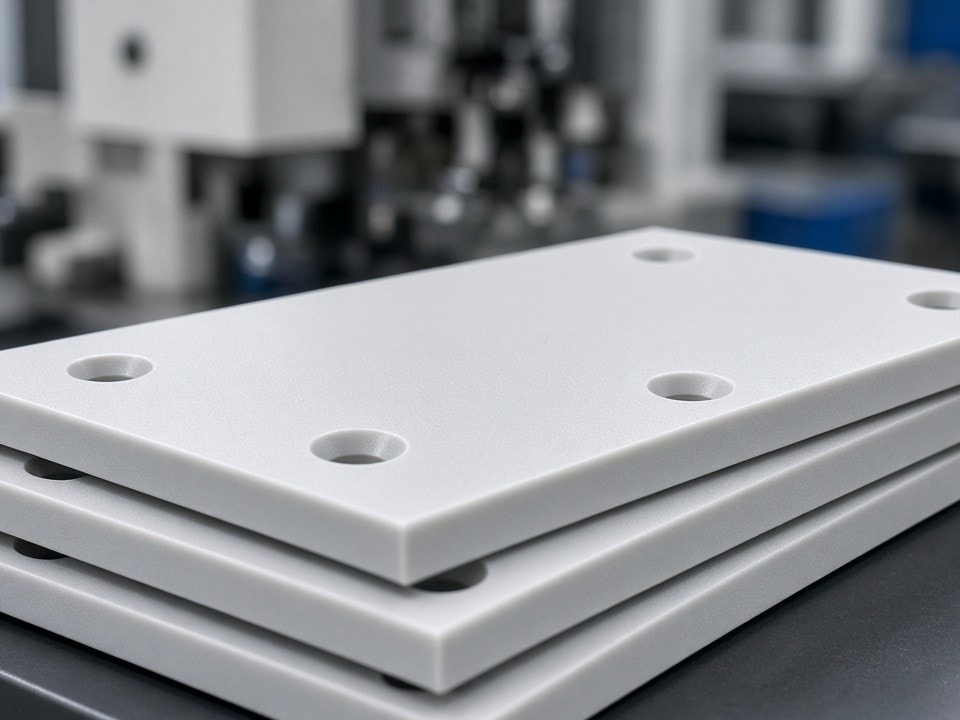
We manufacture custom plastic sliding plates for mechanical equipment, heavy-duty sliding mechanisms, mold auxiliaries, and automation systems. Based in Shenzhen, China, Plasticpartsmfg makes plates to customer CAD files, engineering drawings, or samples, with options for flat and custom-shaped profiles, mounting holes, counterbores, grooves, and inserts.
We support prototype, low-volume, bridge, and contract manufacturing projects, from one-off parts to production quantities. Send us your part requirements to discuss material, machining approach, tolerances, and quotation.
Have a drawing ready? Send STEP, STP, IGES, DXF, DWG, or PDF files to [email protected] for review.
- Materials
- UHMW-PE · POM · PEEK · HDPE · PA
- Features
- Holes · Counterbores · Grooves · Inserts
Custom plate machining for equipment and sliding mechanisms
A sliding plate needs to suit its operating conditions—not just its outline. We review the plate geometry alongside the expected load, movement, mating surface, environment, and mounting method. This helps us assess material options and details that may affect friction, wear, fit, and service life.
Depending on the design and production quantity, we can produce plates through CNC machining or evaluate another suitable plastic manufacturing process. Machined parts are useful for prototypes and lower-volume projects where you need custom dimensions or features without committing to production tooling. For larger quantities or specific part geometries, we can discuss whether molding is a better fit.
Features we can review from your drawing
- Flat plates and custom-shaped profiles
- Mounting holes, slots, and counterbores
- Oil grooves, lubrication channels, and machined recesses
- Inserts and other specified mounting features
- Custom thicknesses, edge details, and surface finishes
- Secondary operations such as polishing, printing, bonding, or assembly, where applicable
Feature feasibility and achievable tolerances depend on the material, dimensions, geometry, and manufacturing process. We review critical requirements against the drawing before confirming a quotation.
Plastic sliding plate materials
We work with plastics including PE, HDPE, POM, PEEK, PA, and other materials selected according to project requirements. The right choice depends on the operating load, motion, temperature, chemical exposure, counterface, and lubrication conditions.
| Material option | Considerations for sliding plate applications |
|---|---|
| UHMW-PE | A possible option for sliding and wear applications. Confirm grade availability and suitability against the load, temperature, and operating environment. |
| POM | Often considered for dimensionally defined components and moving assemblies. Suitability depends on the design and service conditions. |
| PEEK | An engineering plastic option to evaluate for demanding temperature or chemical conditions. Confirm the required grade and application requirements. |
| HDPE | May suit selected equipment and support applications, depending on load, temperature, and design. |
| PA | Can be considered for certain wear and load conditions; moisture and dimensional requirements should be reviewed. |
Material names alone do not determine performance. Friction and wear depend on the plastic grade, surface finish, contact pressure, speed, temperature, lubrication, alignment, and mating material. Share these details with your drawing so we can assess the options more accurately.
Common types of plastic sliding plates
The names below describe common plate functions and configurations. We can review custom drawings for these styles and advise on material, contact surfaces, grooves, and mounting details.
Plastic Flat Sliding Plates
Flat contact face, plate thickness, support, and mounting method.
Plastic Guide Plates
Guide-face alignment, clearance, and attachment to the machine.
Plastic Wear Plates
Replaceable wear surface, contact pressure, and expected movement.
Plastic Bearing Plates
Load distribution, mating surface, and lubrication conditions.
Plastic Machine Slide Plates
Machine travel, mounting pattern, flatness, and operating load.
Plastic Grooved Sliding Plates
Groove location, depth, and its effect on the contact surface.
Plastic Lubrication-Groove Plates
Oil or lubrication-channel layout, feed points, and operating method.
Plastic Support Sliding Plates
Supported area, fixing points, and load distribution.
Plastic High-Load Slide Plates
Contact pressure, plate support, material grade, and operating cycle.
Custom Shaped Sliding Plates
Profile, cutouts, holes, inserts, and fit with surrounding parts.
Thickness, flatness, friction, and wear requirements
Sliding plates may need to fit existing equipment or control clearance in a moving assembly. If thickness, flatness, or hole position is critical, specify the required values and datums on your drawing. We assess these requirements against the part size, geometry, material, and process before confirming what can be produced.
Wear life cannot be determined from material type alone. If you have test data or an existing part to use as a reference, include it with your enquiry.
For friction and wear evaluation, include:
- Static and moving loads, or contact pressure if known
- Sliding speed, direction, and frequency of movement
- Mating material and condition of the opposing surface
- Lubrication method, if any
- Operating temperature and exposure to chemicals or moisture
- Required service interval or wear-life target
From prototype plates to repeat production
We support customers at different stages of a project.
-
Stage 01
Prototype
Check fit, assembly, and sliding behavior with a custom-machined plate.
-
Stage 02
Engineering and validation
Produce parts for functional testing using the specified material or an agreed alternative.
-
Stage 03
Low-volume and bridge production
Make batches while you validate the product, finalize design details, or prepare for a production process.
-
Stage 04
Repeat or contract manufacturing
Review recurring requirements, multiple part numbers, finishing, assembly, and packaging.
If the design or order quantity makes another process more suitable, we can discuss options across our plastic manufacturing capabilities, including CNC machining, injection molding, and other custom processes.
Frequently asked questions
Common questions about materials, features, tolerances, order quantities, and wear assessment.
Request a quote for custom plastic sliding plates
To help us review your project, send the details below with your enquiry.
- 1.CAD files or a dimensioned drawing
- 2.Material and grade requirements, if specified
- 3.Quantity for prototype and expected production orders
- 4.Critical thickness, flatness, hole-position, or fit requirements
- 5.Load, motion, lubrication, and operating-environment details
- 6.Surface finish, inserts, assembly, or packaging requirements
We accept STEP, STP, IGES, X_T, STL, DXF, DWG, and PDF files. If you have a physical sample rather than a drawing, describe the part and its application in your enquiry.
Send your files to [email protected] to discuss your custom plastic sliding plate requirements and request a quotation.
Manufacturing location: