
Custom PPS Injection Molding Services
Plasticpartsmfg specializes in custom Polyphenylene Sulfide (PPS) injection molding for engineering and procurement teams demanding thermal resistance, chemical inertness, and structural reliability. Based in Shenzhen, we support rapid prototyping through full-scale production.
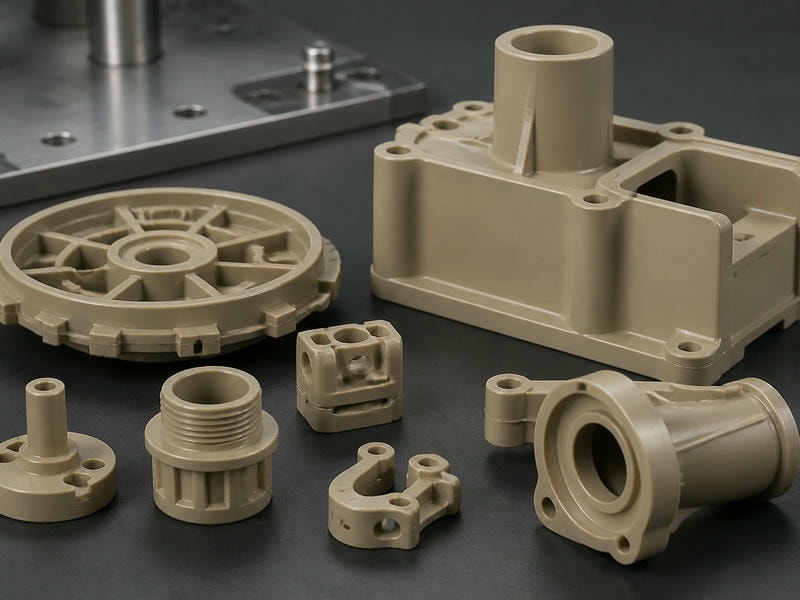
PPS Technical Capabilities & Specifications
Polyphenylene Sulfide is an advanced semi-crystalline polymer designed for rigorous operating criteria. We mold pure unfilled resin along with glass-filled and mineral-filled grades.
Accommodating micro-precision electronic inserts to heavy industrial assemblies with balanced tonnage.
Tight control on critical dimensions, utilizing optimized mold tool designs and controlled shrink rates.
Expertise handling neat PPS, 30%–40% glass-fiber reinforced, and high-density mineral compounds.
From rapid pilot tooling for design verification to multi-cavity hardened tooling for global rollout.
Retains mechanical strength and creep stability under continuous high ambient working temperatures.
Inherent non-flammability characteristics without toxic or halogenous flame-retardant chemistry.
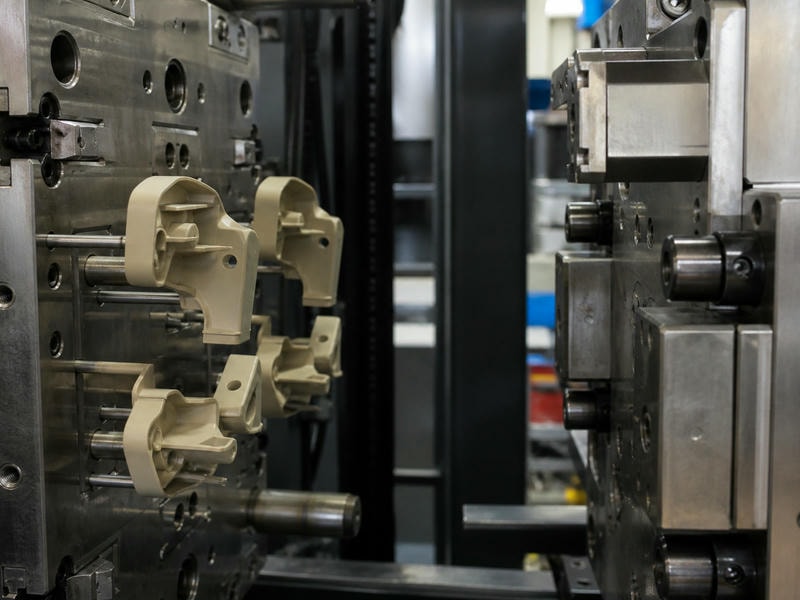
Why Engineers Specify PPS in Demanding Operating Conditions
When common engineering polymers like ABS, Polypropylene, or standard Polyamides degrade or lose dimensional control under heat and chemical attack, PPS provides an optimal performance-to-cost ratio.
Superior Chemical Inertness
Insoluble in practically all known solvents below 200°C. Immune to prolonged contact with motor fuels, brake fluids, oils, steam, and industrial cleaners.
Hydrolytic Stability & Low Shrinkage
Near-zero moisture absorption ensures that molded components retain tight clearance tolerances even when submerged or operated in wet environments.
Inherent Dielectric Performance
Excellent volume resistivity and high dielectric strength across fluctuating thermal and moisture ranges make it the gold standard for compact electronic connectors.
Applications Across Regulated Sectors
Our team manufactures custom PPS components where failure under cyclic thermal or chemical load is unacceptable.
Under-The-Hood Systems
Fuel delivery components, pump bodies, manifold pressure sensors, ignition systems, and electronic braking valves.
Fluid & Thermal Handling
High-temperature fluid pump impellers, steam valves, gas meter housings, and corrosive chemical delivery fittings.
Switchgear & Connectors
Precision terminal blocks, micro-switches, coil bobbins, high-voltage relay cases, and surface-mount electronic headers.
Sterilizable Equipment
Surgical device grips, diagnostic fluid sensors, and laboratory instruments subject to repeated autoclave cycles.
PPS vs Alternative Engineering Polymers
Review how Polyphenylene Sulfide compares directly against adjacent materials to evaluate weight, cost, and process dynamics.
When to select PPS:
PPS delivers a markedly lower raw material price point while delivering near-identical chemical resistance and continuous thermal thresholds up to 220°C. For serial production where extreme unnotched impact strength is not mandated, PPS offers substantial commercial savings.
When to select PEEK:
PEEK is justified when the application demands continuous operations above 250°C, extreme elongation before break, or exceptional self-lubricating wear resistance under unlubricated friction.
End-to-End Production & Quality Control
Processing PPS requires specialized barrel heating, mold temperature regulation up to 150°C, and dedicated ventilation. Here is how our engineering workflow ensures defect-free components.
DFM Review
Evaluation of uniform wall thicknesses, draft angles, gate locations, and fiber-orientation weld line placement.
Hardened Tooling
Tool construction using abrasion-resistant steels (H13, NAK80, or S136) to resist abrasive wear from glass fibers.
Dehumidifying Drying
Desiccant pre-drying at 130°C–150°C to eliminate micro-moisture, preventing splay, internal voids, and polymer brittleness.
Controlled Molding
Closed-loop process parameters with heated oil mold controllers ensure complete crystallinity and structural strength.
CMM & Inspection
CMM dimensional verification, tensile verification, and surface finish validation against 2D engineering drawings.
Secondary Operations & Turnkey Assembly
We provide turnkey support from raw molded parts to fully assembled, tested modules delivered to your door.
CNC Post-Machining
Precision milling, tapping, and reaming of complex cross-holes, internal threads, or ultra-tight O-ring grooves.
Insert & Ultrasonic Joining
Automated heat staking, brass thread insert installation, and ultrasonic welding of multi-part structural enclosures.
Surface Finishing
Cryogenic or mechanical deflashing, pad printing, laser marking for traceability, and mold texturing to SPI/VDI standards.
Packaging & Global Export
Custom anti-static trays, vacuum sealing, barcoded shipping boxes, and reliable logistics support from our Shenzhen hub.
Request a Quote & DFM Consultation
Submit your project requirements to receive a fast technical review, mold flow assessment, and commercial quotation from our engineering team.