
Custom Manufacturing
Custom Plastic Reservoirs for Equipment and Industrial Systems
Plasticpartsmfg manufactures custom plastic reservoirs for equipment OEMs, product developers, and contract manufacturing projects. Send us your CAD files, drawings, or sample to discuss reservoir geometry, material, openings, mounting features, and production quantity.
We support prototypes, low-volume orders, bridge production, and repeat manufacturing. Depending on the reservoir design and volume, production may use CNC plastic fabrication, thermoforming, blow molding, or rotational molding.
- Processes
- CNC · Thermoforming · Blow · Rotational
- Volumes
- Prototype to repeat production
- Location
- Shenzhen, China
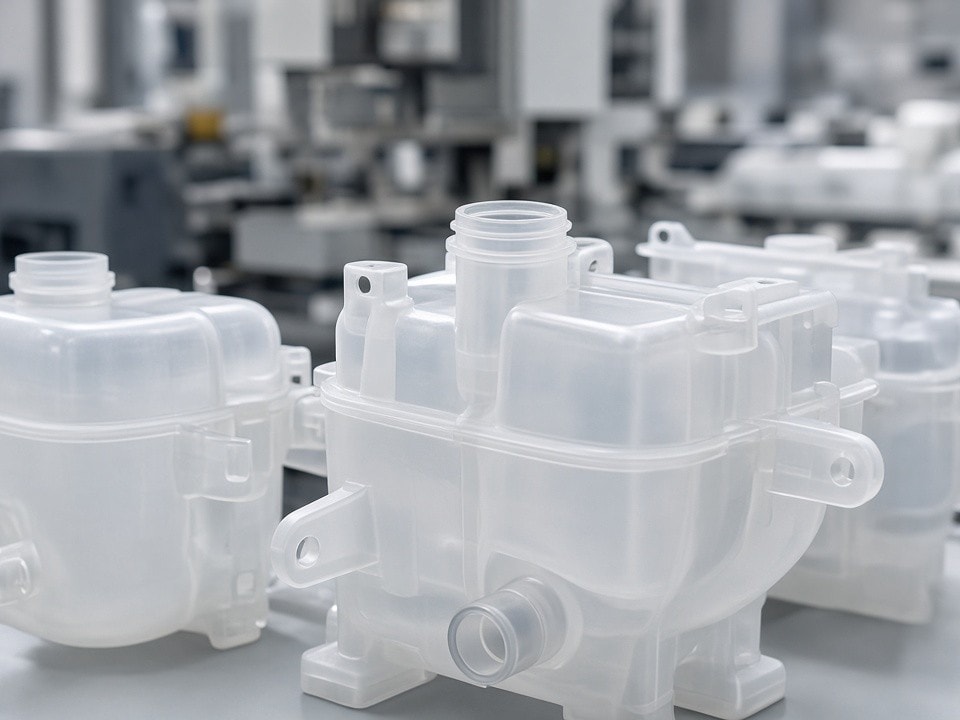
Reservoir Designs Made to Your Specifications
A reservoir must fit the equipment and work with the fluid it contains. We manufacture to customer-defined dimensions and requirements.
Dimensions & Capacity
Non-standard length, width, height, and capacity engineered to your equipment envelope.
Openings & Connections
Inlet, outlet, drain, vent, and fill openings with threaded, molded, or formed connection features, subject to design and process.
Mounting & Interfaces
Mounting points, brackets, bosses, and interface features that integrate with your assembly.
Internal Structure
Baffles, partitions, covers, and integrated components where feasible.
Level Visibility
Transparent or translucent areas for fluid-level visibility, with clarity and cosmetic targets confirmed against the chosen process.
Finishing & Assembly
Custom colors, surface finishes, bonding, and assembly requirements.
Share the fluid type, operating conditions, and interface details with your files. These inputs help us assess manufacturability and identify questions that could affect sealing, material selection, or production route.
Plastic Reservoir Manufacturing Capabilities
The best manufacturing process depends on the reservoir’s shape, size, wall construction, required quantity, and design details. We review these factors before recommending a route.
| Manufacturing route | Potential fit | Points to review |
|---|---|---|
| CNC plastic fabrication | Prototypes, custom geometries, and low-volume parts made from plastic stock or sheet | Part construction, joints, access for machining, and assembly requirements |
| Thermoforming | Formed reservoir shells, trays, or related components | Draw depth, wall distribution, trimming, openings, and joining method |
| Blow molding | Hollow reservoir designs suited to a molded body | Shape, opening locations, tooling, wall distribution, and production volume |
| Rotational molding | Larger hollow forms and designs that suit rotational molding | Geometry, wall thickness, tooling, inserts, and cycle considerations |
A design may require more than one operation. CNC machining, bonding, polishing, printing, or assembly can be considered according to the part drawing and project requirements. Process availability for specific features is confirmed during the quotation review.
Materials for Fluid Compatibility and Service Conditions
Material selection affects chemical resistance, temperature performance, stiffness, impact behavior, transparency, and joining options.
No plastic is universally compatible with every fluid. Provide the fluid name or composition, concentration, operating temperature, exposure duration, and any cleaning agents used. We can review the requested material against the information supplied, but final material approval should account for the application’s actual conditions and any applicable industry requirements.
-
PP and PE
Often considered for tanks and fluid-contact components; suitability depends on the specific fluid and operating conditions.
-
HDPE
An option for applications requiring a robust polyethylene component, subject to design and process fit.
-
PVC
Considered for selected chemical and equipment applications after compatibility review.
-
PC and PMMA
Useful where visibility or a transparent component is required; chemical compatibility and stress conditions need careful review.
-
ABS
Used for equipment housings and related components where the application requirements support it.
-
Engineering Plastics
POM, PA, PBT, PPS, PEEK, PSU, and PPSU for applications with particular mechanical, thermal, or chemical requirements.
Wall Thickness, Sealing, and Leak-Test Requirements
Wall thickness and construction need to match the reservoir’s size, geometry, mounting method, and operating conditions. Molded parts may have process-related wall distribution considerations, while fabricated designs depend on the stock material, joint layout, and assembly method.
Leak-test requirements should be agreed before production. Plasticpartsmfg can review the requested criteria and confirm the feasible inspection approach for the selected design and process before an order is placed. Do not assume a reservoir is pressure-rated unless the design and test requirements have been explicitly reviewed.
Include These Details for a Reliable Quote
- Required wall thickness or an acceptable range
- Fluid level, fill, drain, vent, and connection locations
- Seal type or mating-part details, if defined
- Pressure, vacuum, temperature, or vibration conditions
- Mounting loads and expected service life
- Leak-test method, test pressure or duration, and acceptance criteria, if specified
Custom Reservoir Features and Finishing
Reservoirs often need to connect directly to a larger assembly. We can review the required interfaces and secondary operations alongside the main component.
Cutouts & Machined Openings
Openings positioned and sized to match your mating components and assembly sequence.
Bonding & Assembly
Joining and assembly operations reviewed against the part drawing and joint layout.
Surface Finishing
Polishing or other specified surface finishing to meet cosmetic requirements.
Printing & Engraving
Labels and level markings applied per your specification.
Painting & Color
Color and painting requirements handled as part of the finishing scope.
Packaging
Packaging requirements for shipment or downstream assembly.
For transparent and translucent parts, specify the visibility area, preferred clarity, color, and any surface or cosmetic requirements. Transparency can depend on both material and manufacturing process, so the finished appearance should be confirmed against the chosen design and production route.
Common Plastic Reservoir Categories
We manufacture custom reservoir components for different equipment and fluid-handling applications.
- Plastic Fluid Reservoirs
- Plastic Coolant Reservoirs
- Plastic Chemical Reservoirs
- Plastic Hydraulic Reservoirs
- Plastic Laboratory Reservoirs
- Plastic Medical Fluid Reservoirs
- Plastic Equipment Reservoirs
- Plastic Transparent Reservoirs
- Plastic Integrated Reservoirs
- Custom Molded Reservoirs
These categories describe application types, not a guarantee of suitability for a specific fluid or regulated use. For medical and laboratory equipment projects, provide the applicable material, cleanliness, documentation, and validation requirements for review. Manufacturing support does not imply regulatory certification or approval.
Choosing a Process for Your Project
The expected quantity and design maturity usually help determine the most practical manufacturing route.
Prototype or Design Validation
CNC plastic fabrication can suit early parts where design changes are expected and production tooling is not yet justified. Thermoforming may also be considered for suitable formed geometries.
Low-Volume or Bridge Production
CNC fabrication and thermoforming can support selected custom designs. The right option depends on reservoir construction, finish, and assembly needs.
Repeat or Higher-Volume Production
Blow molding or rotational molding may be considered for suitable hollow designs when the geometry and quantity support dedicated tooling.
Uncertain Design or Fluid Conditions
Start with a drawing review and confirm the material, connection interfaces, operating conditions, and test criteria before committing to a production process.
If a reservoir’s geometry does not fit the proposed process, we can discuss design adjustments or another manufacturing route available through our capabilities.
From CAD Review to Repeat Orders
To assess a reservoir project, send the information available from your engineering or purchasing team.
We review the supplied information to clarify process fit, material questions, manufacturing details, and quotation scope. Prototype approval and repeat-production requirements can be discussed as part of the project.
-
1
CAD model or technical drawing
-
2
STEP, STP, IGES, X_T, STL, DXF, DWG, or PDF files
-
3
Required material, color, and transparency level
-
4
Fluid and operating-condition details
-
5
Dimensions, tolerances, wall thickness, and interface requirements
-
6
Initial and forecast quantities
-
7
Surface finish, assembly, packaging, and leak-test requirements
Request a Custom Plastic Reservoir Quote
Send your reservoir drawings or CAD files for a project review. Include the application, fluid, target quantity, and any known sealing or leak-test criteria so we can assess the requirements more effectively.
- Brand
- Plasticpartsmfg
- Manufacturing Location
- Shenzhen, China
- Address
- Building 1, No. 8, Chenggong Industrial Park, Kukeng, Longhua District, Shenzhen
- Contact
- [email protected]
Send Your Project Details
Share your files and requirements. Our team will confirm process fit, material questions, and quotation scope.