
Custom PP Blow Molding Services for Industrial and Consumer Applications
Plasticpartsmfg provides specialized polypropylene (PP) blow molding solutions from our Shenzhen production facility. We partner with product designers, mechanical engineers, and procurement specialists to transition 3D CAD concepts into high-integrity, hollow plastic parts engineered for demanding chemical, thermal, and structural duty.
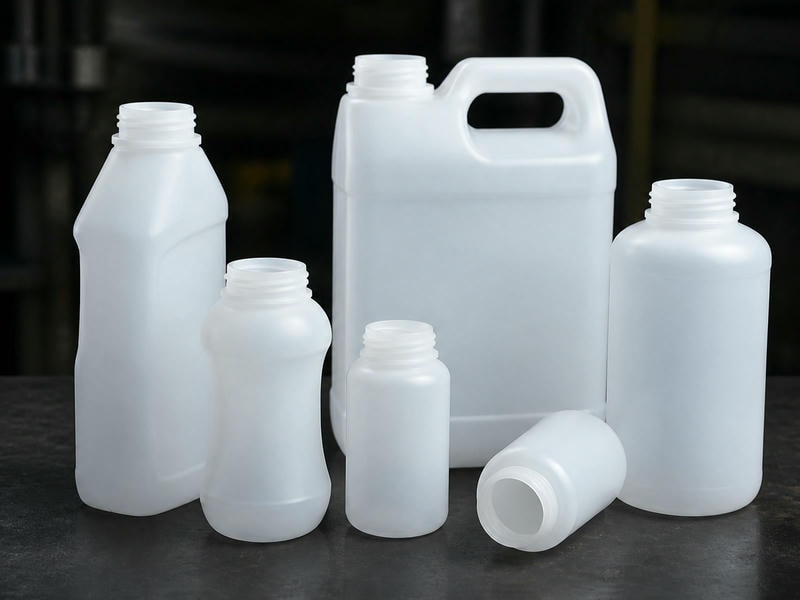
Manufacturing Capabilities & Specifications
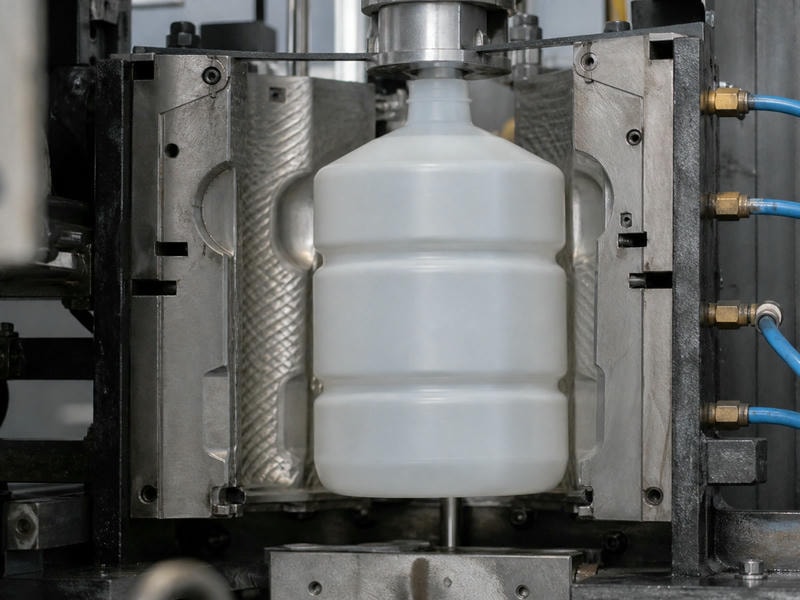
Our facility focuses on producing repeatable, structurally sound hollow bodies via continuous and accumulator Extrusion Blow Molding (EBM). From fast-turn prototype validation to multi-cavity mass runs, our tooling and processing guarantee dimensional compliance.
| Capability Metric | Technical Range & Provision |
|---|---|
| Primary Process | Extrusion Blow Molding (EBM) with automated parison profiling |
| Material Selection | Polypropylene (PP) - High/Low Density, Copolymer & Homopolymer grades |
| Part Envelope | Small to medium-sized hollow components (ducts, bottles, technical canisters) |
| Wall Thickness Control | Customized single-wall & reinforced corners based on FEA and hydrostatic needs |
| Typical Tolerance | ±0.20 mm to ±0.50 mm (dependent on parting plane & feature shrinkage) |
| Batch Capacity | Low-volume pilot runs (500+ units) to continuous mass production (100,000+ units/mo) |
| Secondary Services | Robotic deflashing, precision CNC trimming, post-blow drilling, heat staking, assembly, and custom packaging |
Why Choose PP for Your Hollow Blow Molded Parts?
Polypropylene is a premier thermoplastic for hollow components that demand longevity in aggressive operating environments. It bridges mechanical endurance and cost efficiency without adding dead weight to your assemblies.
Chemical Stability
Outstanding resistance to corrosive acids, alkalis, alcohols, and industrial solvents, making it ideal for fluid reservoirs, chemical dispensers, and laboratory packaging.
Structural Fatigue Resistance
Superior resistance to repetitive mechanical stress and flexing, enabling the direct molding of durable integrated living hinges, bellows, and expandable air channels.
Weight Efficiency & Low Density
With one of the lowest densities among engineering plastics (~0.90 g/cm³), PP parts lower material volume costs and substantially decrease final assembly shipping weight.
Thermal & Environmental Range
Retains mechanical stiffness up to continuous temperatures of 80°C to 100°C, remaining functional through hot-fill applications and engine-bay fluid transfer.
We offer FDA-compliant food contact resins, UV-stabilized outdoor formulations, flame-retardant grades (UL94-V2/V0), and customized masterbatch coloring to match your exact Pantone or RAL reference.
Engineering Support: From CAD to Production Tooling
We provide deep design-for-manufacturing (DFM) reviews prior to mold cut. Our technical team works directly inside your 3D models to eliminate shrinkage voids, minimize cycle time, and guarantee structural rigidity.
Parison Profiling
Programming dynamic parison thickness to ensure corners, deep draws, and necks maintain uniform wall thickness without thin spots or blowouts.
Draft & Ejection
Optimizing mold draft angles across internal ribbing and perimeter faces to prevent scuff marks, reduce cycle duration, and allow clean part release.
Pinch-Off Geometry
Configuring mold pinch-off blades and exhaust venting to create robust molecular welding along the seam while minimizing post-trim flash.
Insert & Hardware
Engineering mold-in threaded brass bushings, spin-welded spouts, or bracket assemblies directly into the PP housing for unified structural strength.
Process Evaluation: Blow Molding vs. Injection Molding
Choosing the right manufacturing methodology dictates tooling amortisation and unit unit economics. Use this quick comparison to confirm whether Extrusion Blow Molding fits your component geometry.
Extrusion Blow Molding (PP)
- ✔ True Hollow Enclosures: Bottles, liquid tanks, air ventilation ducts, floats, and double-walled carrying cases.
- ✔ Lower Tooling Investment: Operates at significantly lower cavity pressures (25-100 psi vs. thousands of psi), requiring less massive aluminum or P20 steel molds.
- ✔ Monolithic Construction: Eliminates secondary ultrasonic welding or adhesive bonding required when joining injection-molded clamshell halves.
- ✔ Wall Thickness Adjustability: Minor thickness modifications can often be tuned on machine parison heads without re-machining the tool.
Injection Molding (PP)
- • Open-Face Components: Trays, solid levers, flat panels, bezels, and shallow covers without enclosed hollow spaces.
- • Ultra-Fine Exterior Tolerances: Preferred when micro-features (< ±0.05 mm) and high-polish optical gloss surfaces are mandatory.
- • Higher Tooling Cost: Hardened multi-cavity injection steel tooling incurs higher upfront NRE capital expense.
- • Requires Joining: If hollow fluid containment is needed, parts must be molded in sections and spin-welded or screwed together.
Partner with Plasticpartsmfg
Headquartered in Shenzhen, China, we streamline rapid mold building and sustained production for global hardware firms and OEM manufacturers. Reach out with your drawings for a detailed DFM report and firm pricing within 24 business hours.
Quotation Package Checklist
To accelerate your engineering review, please include:
- CAD files in 3D STEP, IGES, or STL format
- 2D PDF drawing with critical inspection tolerances
- Target batch size and annual estimated volumes
- Resin requirements (specific PP grade, color, flame rating)
- Downstream requirements (inserts, leak testing, printing)
Submit RFQ & Design Specifications
Fill out project parameters below. Our engineering leads will evaluate moldability and provide feedback.